Key findings
Thin pipeline, high stakes: How are companies planning to expand access to vital, new antimicrobials?
10 March 2026
10 March 2026
Five years since the release of the 2021 Antimicrobial Resistance (AMR) Benchmark, this new iteration evaluates a cross-section of the pharmaceutical industry, ranging from large research-based companies to generic medicine manufacturers to smalland medium-sized enterprises (SMEs),* focusing on areas where they have a clear responsibility to help address AMR. In evaluating efforts across three Research Areas – Research & Development, Responsible Manufacturing and Appropriate Access & Stewardship – findings from the 2026 AMR Benchmark reveal where companies perform strongly and where progress needs to be accelerated in tackling AMR.
Overall industry trends reveal some hopeful spots of progress from companies, but more comprehensive efforts are needed across the board. Further insights across Key Findings, Thematic Analyses and Best Practices showcase several other notable trends that provide valuable context and highlight broader patterns emerging from the Benchmark’s analysis of company actions to address AMR.

When compared to the previous 2021 Benchmark, there has been a 35% decrease in the number of pipeline projects in development from large research-based pharmaceutical companies. All companies have had considerable pipeline contractions. GSK remains the outlier – maintaining a pipeline of 30 candidates spanning both preventive vaccines and antibacterial therapeutics, including three innovative candidates. Conversely, MSD and Johnson & Johnson have had the largest decreases in pipeline sizes (85% and 64% respectively); with the latter ceasing its vaccines and infectious disease R&D in 2023. Consequently, only three companies – GSK, Otsuka and Shionogi – are continuing to invest in innovative antimicrobial R&D; other companies have only a small number of projects in development, primarily focused on vaccine programmes and/or adaptive R&D of existing medicines.
Performance across access and stewardship planning is mixed. While most pipeline candidates (83%) in development have some measure of access and/or stewardship plans in place, the quality of plans varies considerably. In general, there is a focus on high-level commitments or overarching policies, often lacking concrete actionable plans. However, for some innovative candidates, companies have developed access and stewardship plans to ensure appropriate use that explicitly address availability, affordability and supply in LMICs.
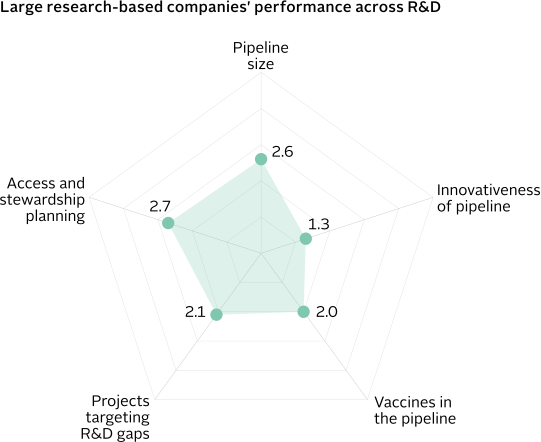
The eight small- and medium-sized enterprises (SMEs), newly assessed in the 2026 Benchmark, are driving innovation for critical- and high-priority pathogens. Six of these eight companies have innovative medicines in their pipeline. Collectively, these companies have been filling gaps left by the withdrawal of large research-based companies and lead in the development of medicines for resistant fungal infections. Although the total number of innovative candidates (15) – across both company types – is still worryingly low, SMEs are punching above their weight relative to large research-based companies. This is despite having substantially less capital, in-house expertise and global commercial presence – all while navigating the same challenging scientific and commercial conditions to bring antimicrobials to market.
Performance for access and stewardship planning is also mixed across SMEs; 36% have no access or stewardship plans in place. However, some candidates have notable plans that simultaneously address barriers to availability, affordability and supply – especially through leveraging partnerships – to scale appropriate access in LMICs with high unmet needs.
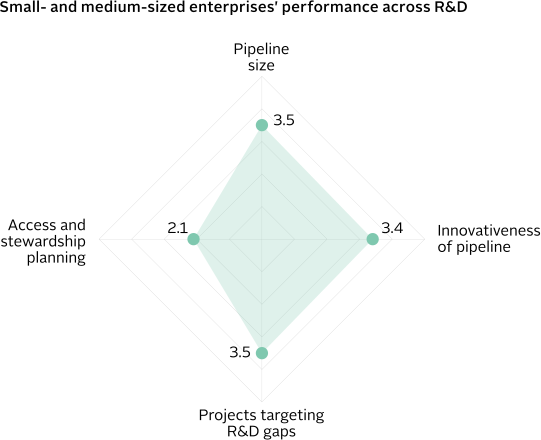
Across the entire antimicrobial pipeline of both SMEs and large research-based companies, limited activity and scarce innovation have revealed shortcomings in both the quantity and quality of new candidates – signalling an imminent scarcity of effective treatment options for resistant infections. There have been some positive developments, with regulatory approvals for three antibiotics with innovative characteristics – developed by GSK, Innoviva* and Iterum, respectively. Additionally, MSD has had one vaccine approval and Pfizer has secured three new approvals – one new antibiotic and paediatric label extensions for two existing medicines. However, the downward trend in pipeline activity suggests that the rate of innovation is not enough to outpace growing resistance.
In response to the lack of commercial incentives for antimicrobial R&D, governments in high-income countries have been trialling ‘pull incentives’ to stimulate innovation and combat AMR. A leading example is the UK’s National Health Service (NHS), which in May 2024 formally adopted a Netflix-style subscription model that pays fixed annual fees to pharmaceutical companies for access to certain new antimicrobials, encouraging development while decoupling revenue from sales volume.1 This has the dual benefit of guaranteeing a return on investment for companies to sustain R&D, while also aligning with stewardship efforts to prevent overuse of antimicrobials and safeguarding them for future use.
Under this model, drugs such as Pfizer’s ceftazidime-avibactam and Shionogi’s cefiderocol have been evaluated and are being made available through the NHS as part of long-term contracts. Meanwhile, other regions are considering different approaches. In December 2025, the European Union reached a provisional agreement to introduce a ‘transferable exclusivity voucher’ system, which would allow companies to extend the market protection of other successful drugs as a reward for developing new antibiotics.2 Collectively, these initiatives signal to pharmaceutical companies that innovation is commercially supported, and their expansion to other countries should be monitored as means to protect public health in the fight as AMR; both as a viable/lucrative option for companies to generate revenue and sustain R&D and by ensuring availability of critical antimicrobials for drug-resistant infections.
*Nine small- and medium-sized enterprises (SMEs) were originally part of the company scope for the 2026 AMR Benchmark Methodology. However, in January 2026, Pulmocide announced the termination of its Phase II trial for opelconazole. This was the company’s sole pipeline project analysed, leading to Pulmocide’s removal from the 2026 AMR Benchmark Report. As such, eight SMEs are included in the final assessment.
*Innoviva's zoliflodacin was approved after the period of analysis for the 2026 AMR Benchmark concluded.
References:
1. Duddy, C. (2024, September 18). “Netflix” for antimicrobials: The Antimicrobial Products Subscription Model. House of Commons Library. https://commonslibrary.parliament.uk/netflix-for-antimicrobials-the-antimicrobial-products-subscription-model/
2. European Parliament. (2025, December 11). Deal on comprehensive reform of EU pharmaceutical legislation. European Parliament. https://www.europarl.europa.eu/news/en/press-room/20251209IPR32110/deal-on-comprehensive-reform-of-eu-pharmaceutical-legislation

The 2026 AMR Benchmark assessed whether antibiotic discharge limits are being quantified and met at both company-owned and suppliers' manufacturing sites – preferably for individual antimicrobial products. The previous Benchmark only assessed whether companies were quantifying these limits. This shift – reinforced by growing political attention to responsible manufacturing and the publication of the World Health Organization’s (WHO’s) independent guidance on wastewater and solid waste – is intended to encourage companies to track and safeguard against resistance risks associated with the manufacturing of each product individually.
Ensuring full supply-chain compliance – and transparently disclosing this – is critical for responsible manufacturing, as it allows stakeholders to verify robust controls, identify risks and drive consistent industry-wide standards.
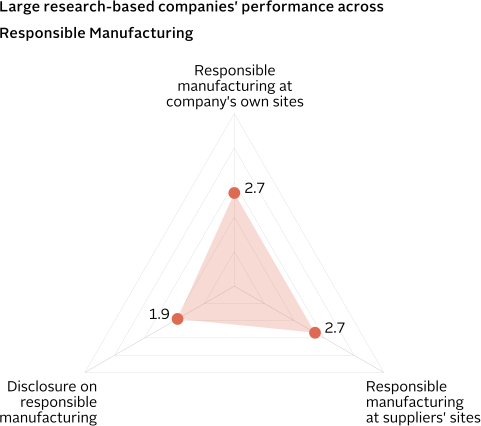
Of the 17 companies assessed in Responsible Manufacturing, ten share details on whether their in-house antibiotic production meets discharge limits. Notably, the number of companies reporting supplier compliance with discharge limits has doubled from four to eight since 2021.
Currently, all companies that do report compliance (at both their own and suppliers’ sites) do so only for waste that has already been discharged into waterways. No company currently complies with limits at end-of-pipe (i.e., directly in wastewater before it is released into the environment), as recommended by WHO.
GSK is the only large research-based company that reports 100% compliance across its entire antimicrobial supply chain (i.e., at both its own sites and suppliers’ sites). Shionogi reports 100% compliance at its own sites but only reports 73% compliance at supplier sites. However, it is the level of detail and transparency of Shionogi's disclosure that makes it the top performer in Responsible Manufacturing. The company discloses product-specific compliance, with country-level locations of all manufacturing sites across its supply chain. Other companies lag in publicly reporting levels of compliance achieved.
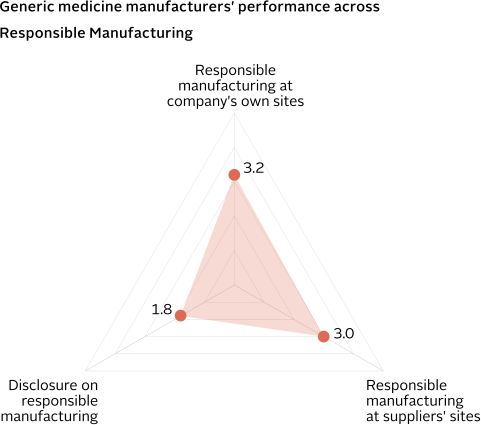
Companies demonstrate good performance and transparency, with five reporting 100% compliance at their own sites and eight disclosing compliance information. More generic companies are also reporting on supplier compliance, with six disclosing compliance data compared to only one in the previous Benchmark.
Aurobindo is the highest performer in Responsible Manufacturing, publicly reporting complete compliance across its supply chain. Sandoz follows closely, also reporting complete compliance, but public disclosure of supplier site compliance information is lacking. Notably, Abbott, Aurobindo, Cipla and Sandoz all demonstrate more engagement to help suppliers meet discharge limits.
A noteworthy example of progress since the previous Benchmark is Alkem. Although it has consistently lagged in implementing an environmental risk management strategy specifically aimed at mitigating AMR, the company recently initiated a gap assessment with BSI Kitemark™ to evaluate antibacterial waste practices at one of its sites.

Modest performance across the board for product registrations, with gaps in paediatric registrations Many large research-based companies have been downsizing their antimicrobial portfolios, with some cutting them by as much as half since 2021. Across all these product types assessed by the 2026 AMR Benchmark, companies systematically prioritise registrations in upper- and lowermiddle- income countries over low-income countries. This is especially the case for vaccines, reflecting a continued focus on emerging markets rather than in areas of greatest unmet need.
Despite 11 low- and middle-income countries (LMICs) being added to the geographic scope of the Benchmark since 2021, the level of product registrations has not widened over the last five years. In fact, registrations remain thin across all product categories, with registrations in an average* of just 24 of the 113 countries in scope.
However, some on-patent medicines evaluated in 2021 – for example, cefiderocol, ceftazidime-avibactam and delamanid – are now registered in a few more countries, leading to an increase in the average* number of registrations across all on-patent medicines from 11 to 16 countries. Overall performance is thus still low here. On-patent vaccines remain most widely registered, averaging* 29 countries, reflecting dynamics such as international procurement and broader target populations. At an average* of 23 countries, registrations of off-patent medicines fall between these categories.
Overall, registrations of off-patent medicines remain stagnant across companies, with some discontinuing some of the products that were included in the 2021 Benchmark. Against this backdrop, only Pfizer stands out for significantly increasing its registrations across off-patent medicines from an average* of 17 countries to 29.
Among off-patent medicines, Access antibiotics are registered most widely – across 78 countries in scope. Reserve antibiotics and antituberculosis medicines are registered significantly less – across 33 countries and 31 countries, respectively. While prioritising Access antibiotics is necessary, as first-line treatments need to be available everywhere, the limited registration of Reserve antibiotics is concerning, particularly given the disproportionate burden of AMR in LMICs.
Paediatric formulations, which are mainly assessed for off-patent Access and Watch antibiotics, are not systematically registered in the same countries where the corresponding adult formulations are registered, creating a clear access gap for children – even for essential first-line treatments.
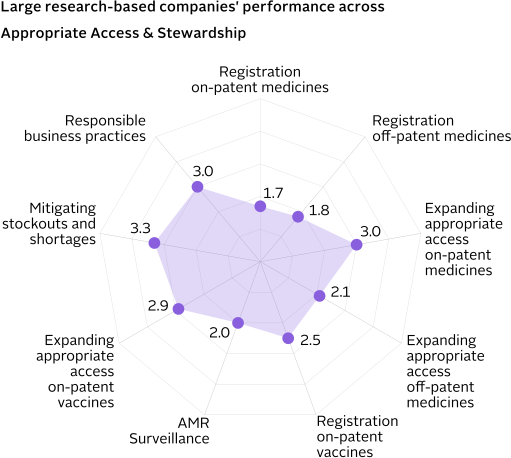
The 2026 Benchmark adopted a more integrated approach to appropriate access and stewardship, incorporating a new assessment of product-specific stewardship strategies and a new patient reach component, to evaluate the effectiveness of the access strategies employed by companies.
Encouragingly, of the 47 products assessed across the portfolios of companies, only one – an on-patent vaccine – lacked any form of access strategy. All other products were supported by either a general access strategy or a tailored approach, designed specifically for the product, the country context, or both. Tailored access strategies are more common than general ones, covering around 65% of medicines (both on and off-patent) and 53% of on-patent vaccines.
Companies show considerable variation in both the transparency and completeness of their patient reach measuring and reporting. Of the seven companies assessed, four disclose details on their methodologies and patient reach figures for at least some products, and only two of these four do so for all assessed products.
Stewardship coverage is highest for on-patent medicines: all of them have a stewardship strategy in place. This is encouraging, as five of the eight are Reserve antibiotics, which require more stringent stewardship. However, only two of these five Reserve antibiotics have product-specific strategies, while the remaining three are only supported by general, high-level measures. Off-patent medicines have less consistent stewardship coverage (73%); among the products that do have coverage, general strategies (58%) are slightly more common than tailored strategies (42%). Most of these strategies – whether general or tailored – focus primarily on responsible promotion and sales strategies, as assessed in Responsible Business Practices.
Since 2021, there has been no significant progress in companies' efforts to implement sales practices that disincentivise the overselling of their antimicrobial medicines. However, in newly assessing governance of interactions with healthcare professionals (HCPs), the Benchmark finds that all companies, except MSD, perform well. Otsuka, Pfizer, Sanofi and Shionogi stand out for clearly addressing stewardship across both sales practices and their governance of interactions with HCPs.
Pfizer and Shionogi are also among the four companies currently actively engaged in AMR surveillance, with GSK and MSD being the other two. While the number of programmes these companies engage in has fluctuated since 2021, the Benchmark notes increased coordination across efforts. Johnson & Johnson and Sanofi discontinued their surveillance efforts since 2021.
Large researched-based companies continue implementing diverse strategies to mitigate shortages and stockouts and to ensure continuous supply. Notably, some companies are increasingly engaging in supplier diversification to strengthen supply chain resilience. Shionogi is the top performer and is among the four companies in this group that reports sharing demand forecasts with country-level stakeholders. This is a drop from 2021, where all companies reported sharing data with external stakeholders, highlighting the need for greater engagement in bilateral data sharing. All seven companies report maintaining buffer stocks of their products – up from six out of eight companies in 2021. However, wider adoption of automated inventory systems is still needed, with only four companies using them.
Off-patent medicines form the core business model for generic producers, but since 2021 there has been no significant progress in the number of registrations across LMICs. Overall, these medicines are only registered in nine of the 113 countries in scope on average*. Only Fresenius Kabi slightly increased its average number of registrations across the products selected for analysis, while other generic medicine manufacturers either stagnated or even regressed. Aurobindo remains the leader, registering its off-patent medicines most widely – 19 countries in scope on average*.
Overall, among off-patent medicines, Access antibiotics are fairly widely registered – across 75 countries in scope. Watch antibiotics and antituberculosis medicines are registered across 68 and 38 countries in scope, respectively, signalling a gap for treatments that can be effective against drug-resistant infections. Reserve antibiotics are registered across only 23 countries, making these last-resort treatments sparse.
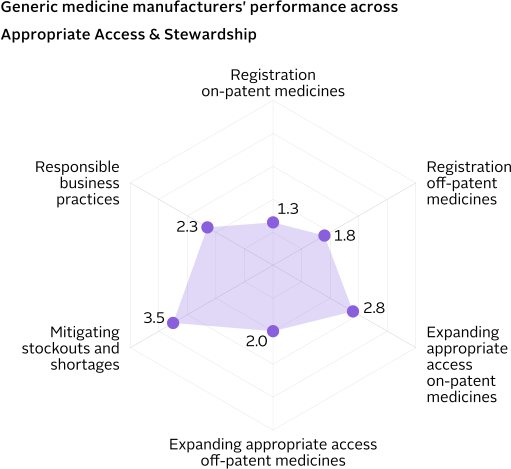
Despite not registering off-patent medicines widely, at least four companies do register off-patent paediatric formulations of their products in a large proportion of the countries they already register other products in, with Sandoz leading here. Across the board, generic medicine manufacturers register paediatric formulations in about half of the countries they register in.
More on-patent medicines are included across the antimicrobial portfolios of companies assessed, but this now includes Hikma’s portfolio, which is newly evaluated in the Benchmark (increasing the number of companies from nine to ten since 2021). The increase in on-patent medicines can have a direct impact on availability – and potentially affordability – of newer medicines in LMICs. However, registrations of on patent medicines are low, with an average* of just six countries and a primary focus on India. This can be attributed to companies being bound by licensing terms and agreements or the territories for which they acquired the commercialisation rights.
Viatris does stand out for registering its on-patent medicine pretomanid in eight additional countries since 2021. While pretomanid is supplied via The Stop TB Partnership's Global Drug Facility (GDF), registering it widely with national regulatory authorities remains important for enabling broader access, including routine procurement outside of GDF procurement channels, and integration into national treatment guidelines. Although Cipla has global rights for its on-patent Reserve antibiotic plazomicin, the company has not registered in any additional countries in scope since 2021.
The 2026 Benchmark adopted a more integrated approach to appropriate access and stewardship, incorporating a new assessment of product-specific stewardship strategies and a new patient reach component, to evaluate the effectiveness of the access strategies employed by companies.
All eight on-patent medicines assessed among generic producers are covered by access strategies, and notably, 62% are tailored approaches. Among off-patent medicines, the vast majority (84%) have access strategies in place, with only 16% lacking any form of strategy. However, unlike on-patent medicines, generic medicines are more likely to have general rather than tailored access strategies, with this being the case for 60% of strategies. For examples of how tailored strategies can address access barriers in LMICs.
Patient reach can provide a temperature check on the effectiveness of access strategies, with the Benchmark assessing generic producers on this for the first time. Encouragingly, six out of the ten companies track patient reach across nearly all assessed antibiotics and antifungals.
Stewardship coverage is notably lower than access strategy coverage for both on-patent and off-patent medicines. Around 40% of medicines, on- and off-patent, lack a stewardship strategy of any form. For on patent medicines, those with a stewardship strategy are more likely to have a product-specific approach (80%) than general stewardship practices (20%), reflecting a proactive approach to safeguarding new medicines from the threat of resistance. Conversely, for off-patent medicines, stewardship strategies are more often general (80%) than product specific (20%).
Performance among generic medicine manufacturers in addressing the appropriate use of antibiotics in their business practices is uneven. Their business model, which relies on volume rather than high margins, is often more conducive to mitigating the overselling of individual products. Some companies do take additional measures to mitigate this risk, contributing to good performance in this area. However, their performance on governing interactions with HCPs is weaker, with nearly half of the companies not incorporating specific provisions in their public policies that can help to ensure such interactions remain ethical. Teva is the only company to include clear principles to address appropriate use across its business practices.
Despite not being evaluated on AMR surveillance, a small number of generic medicine manufacturers continue to report engagement here. While this mostly reflects post-marketing surveillance requirements, Sandoz stands out for doing this beyond such mandates.
Generic medicine manufacturers newly demonstrate the use of upstream strategies to mitigate stockouts and shortages of quality-assured products, such as supplier diversification. Nine of the ten companies are actively pursuing local sourcing of raw materials or finished products in LMICs, which can help mitigate potential supply disruptions. Abbott and Viatris lead here, sourcing from multiple local suppliers for their key antimicrobials. To complement local sourcing in LMICs, all companies, except Alkem, report conducting routine Good Manufacturing Practice audits for their suppliers. However, additional quality assurance measures when sourcing from countries with evolving regulatory systems is still lacking across the board.
*All average numbers are based on the products for which companies disclosed registration data to the 2026 AMR Benchmark. Products from non-submitting companies have been excluded. Products are considered for the product category as per the 2026 AMR Benchmark scope.
