Key findings
Building a better antibiotic arsenal for children
10 March 2026
10 March 2026
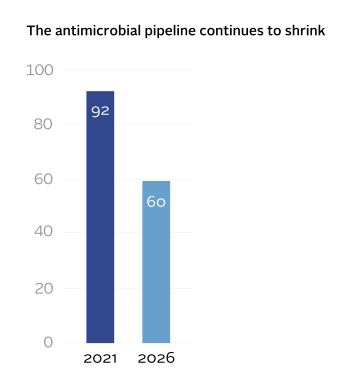
The antimicrobial pipeline continues to shrink, with a 35% decrease in the number of pipeline projects from large research-based pharmaceutical companies assessed by the Benchmark in the past five years.
Amid this declining pipeline, the 2026 AMR Benchmark identified seven new, innovative medicine projects in late-stage development by GSK, Otsuka, Shionogi, BioVersys, F2G, Innoviva and Venatorx.* These target some of the deadliest drug-resistant pathogens disproportionately affecting people living in low-and middle-income countries (LMICs).
While companies demonstrate strong elements in their access planning, Innoviva and Otsuka stand out for detailed, product-specific plans that explicitly address key access barriers in LMICs, including affordability, availability and supply.
*After the period of analysis of the Benchmark, the Global Antibiotic Research and Development Partnership (GARDP) and Venatorx (an SME) agreed to terminate their collaboration agreement on cefepime–taniborbactam, one of the two projects from Venatorx that were analysed in the Benchmark.
Superbugs do not respect borders, and they are putting lives everywhere at risk. But for people in low- and middle-income countries (LMICs), where infectious diseases already hit hardest, this danger is not a distant threat; it is daily life. Infants, children and other vulnerable groups face the highest stakes, especially in countries on the frontlines of drug resistance.1 In addition to having limited access to basic antimicrobials, patients in these settings cannot access the newer treatments that could save them from deadly, drug-resistant infections – leaving them exposed at best, and at worst, without a fighting chance.
As antimicrobial research and development (R&D) continues to decline, people are being left with fewer drugs that can treat resistant infections. Since the publication of the 2021 Antimicrobial Resistance (AMR) Benchmark, for instance, there has been a 35% decrease (92 projects to 60) in the number of pipeline candidates from large research-based pharmaceutical companies assessed (see Figure 1 alongside).
This low number of promising projects makes it vital to ensure that any hopeful new medicine projects in development that successfully make it to market reach the patients who need them most, especially in LMICs where access gaps remain persistent.
Of the 78 projects assessed, seven are especially notable: they target critical- and high-priority pathogens in need of new treatments, exhibit genuine innovation² with potential to overcome resistance, and are already in late-stage development (Phase II or later) with access plans in place. Together, these features position them for future availability in LMICs if they successfully reach the market.
These products originate from both large research-based companies GSK, Otsuka, Shionogi and small- and medium-sized enterprises BioVersys, F2G, Innoviva, Venatorx – and have the potential to significantly impact patients in LMICs (see infographic below).
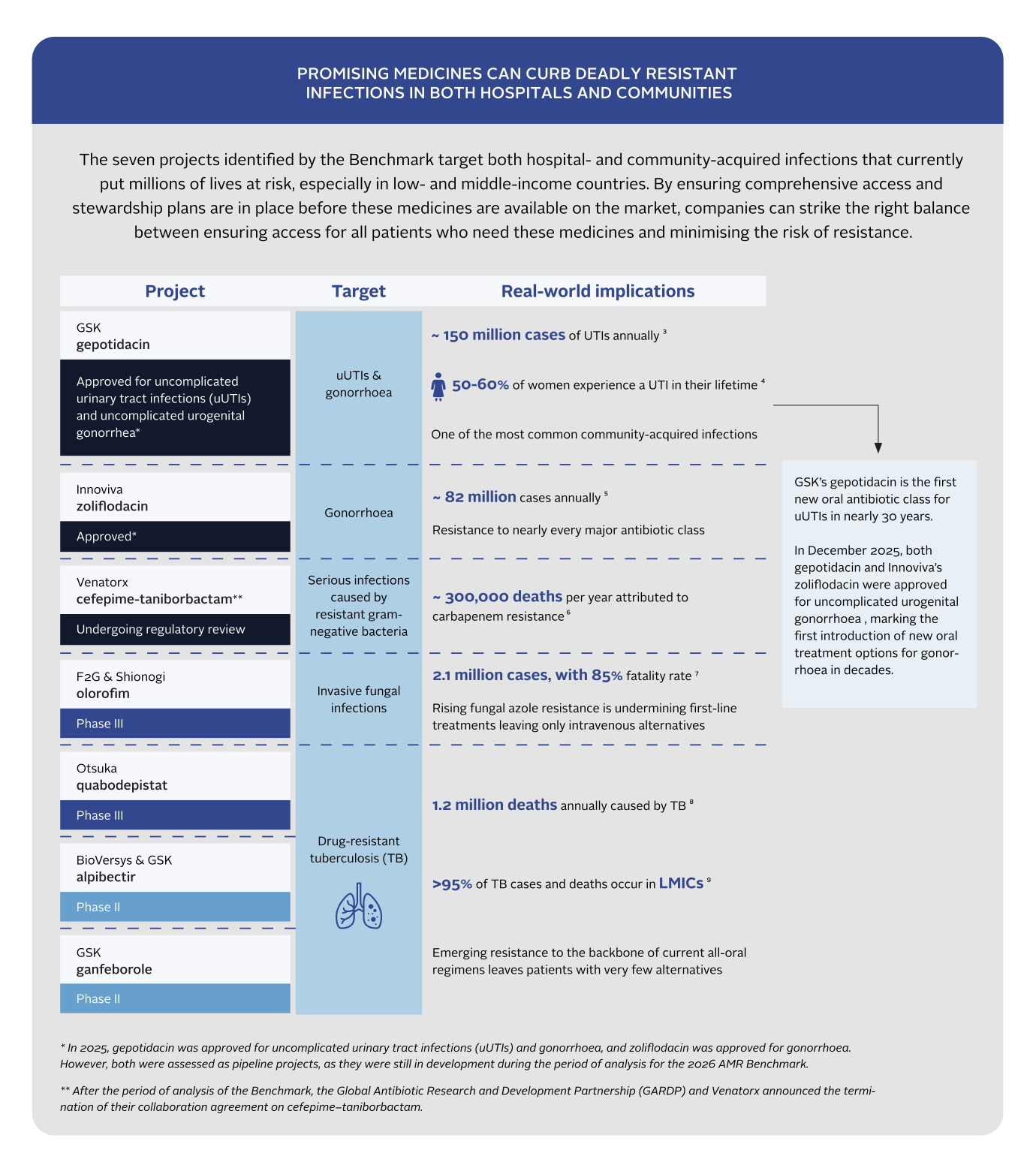
Notably, three projects target multidrug-resistant tuberculosis (MDR-TB). Although MDR-TB has been virtually eradicated in high-income countries, it remains a severe and ongoing public health crisis in LMICs, with only two in five patients able to access appropriate treatment.8 However, the impact of all these potential new drugs will only be realised if the current access plans linked to them are put into practice by companies.
Realising the public health benefit and ensuring appropriate access to these innovations in LMICs is contingent on a shared responsibility: both from companies through their access planning and the implementation of National Action Plans (NAPs) from governments. However, companies can help immensely by weaving in measures into their access plans that can tackle the most critical access challenges in LMICs, such as regulatory barriers and supply chain barriers. Additionally, ensuring that antimicrobials remain accessible and affordable to those who need them most is critical, yet this goal must be balanced with predictable, sustainable returns – which is challenging due to the need to limit antimicrobial use. Governments, in collaboration with companies, can work to develop and implement novel incentive models, which guarantee revenue to sustain R&D investment. In parallel, companies can focus on implementing equitable pricing strategies tailored to ensure fair access across diverse markets. To ensure appropriate use of these drugs, companies and governments can implement stewardship provisions – such as data-sharing arrangements and availability of appropriate diagnostics – to safeguard the efficacy of antimicrobial medicines.
To this end, as set out in the accompanying table, the Benchmark assessed the breadth and depth of the access plans for the seven projects, based on whether companies are specifically considering availability, affordability and continuous supply of these breakthrough treatments in LMICs.
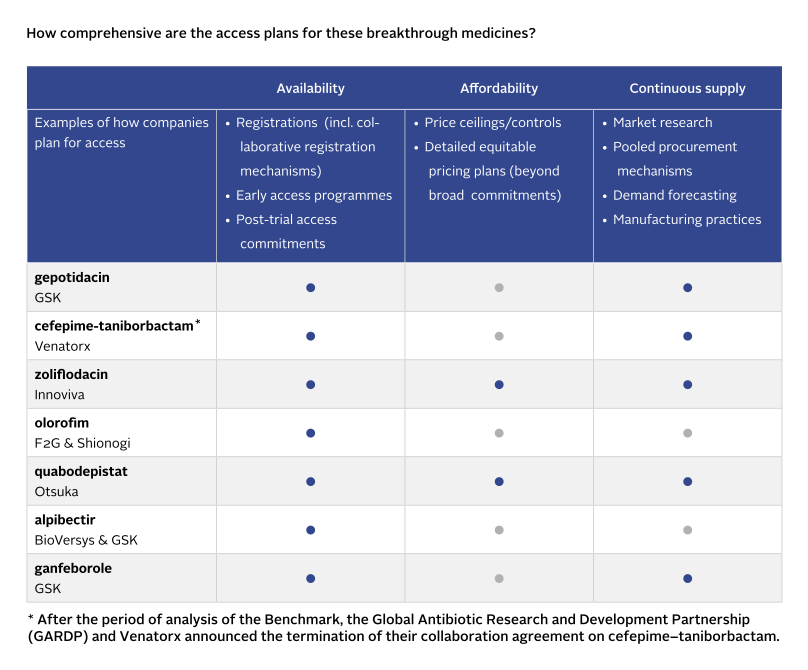
Overall, access plans for the seven projects focus on availability of the medicines in LMICs. While these efforts are encouraging, the depth and specificity of access plans still vary significantly across companies. Only Innoviva and Otsuka collectively and pre-emptively address some of the most critical access barriers of availability, affordability and supply in LMICs through detailed plans at a project-specific level. Partnerships are key for driving innovation in antimicrobial R&D, with both Innoviva and Venatorx collaborating with the Global Antibiotic Research and Development Partnership (GARDP), an organisation that integrates equitable access in LMICs and appropriate use worldwide into its plans.
Without comprehensive, early, appropriate and tailored access planning across the board, the potential impact of by weaving in measures into their access plans that can tackle the most critical access challenges in LMICs, such as regulatory barriers and supply chain barriers. Additionally, ensuring that antimicrobials remain accessible and affordable to those who need them most is critical, yet this goal must be balanced with predictable, sustainable returns – which is challenging due to the need to limit antimicrobial use. Governments, in collaboration with companies, can work to develop and implement novel incentive models, which guarantee revenue to sustain R&D investment. In parallel, companies can focus on implementing equitable pricing strategies tailored to ensure these breakthrough innovations will not be realised. With these treatments so close to reaching the market, the current gaps in access planning could leave millions in LMICs with delayed treatment – or no access at all. With treatment options for resistant infections becoming increasingly limited – or non-existent – and superbugs only increasing, the consequences of missing the opportunity to reach people with these new treatments will be devastating.
For five of the seven projects (gepotidacin, cefepime-taniborbactam, zoliflodacin, olorofim and quabodepistat), companies included project-specific measures in their plans. Such a targeted approach is essential, because stewardship challenges are not uniform across pathogens, products or healthcare settings. Moreover, stewardship planning is particularly critical for last-resort antimicrobials and those used to treat multi drug-resistant infections. (Also see Research & Development chapter for the various elements companies employ in their stewardship plans).
With so few new medicines on the horizon, safeguarding their efficacy with stewardship strategies will go a long way to ensuring these lifesaving treatments are not at risk of AMR. However, access must be secured first, with stewardship hardwired into the access plans that will make these game-changing treatments available and affordable to those who need them, when they need them.
Given the critically thin pipeline of new antimicrobials targeting priority pathogens – and the public health potential of new developments – it is more vital than ever that pharmaceutical companies start integrating early access considerations during R&D.
• Companies must scale up their current access plans, moving beyond high-level plans to actionable commitments that include clear registration pathways and pricing models that balance sustainable returns with affordable access. By tailoring these plans to specific products and countries, companies can maximise their impact on public health.
• In addition to universal availability of their products for those who need it, companies must work alongside governments – with robust AMR policies – to ensure stewardship measures are in place to safeguard appropriate use.
Davis, K., Limato, R., Monga, M., Egid, B., Paul, S., Okioma, S., Nyamwanza, O., Arjyal, A., Ahmed, S. T., Parajuli, A., Kwabla, M. P., Aktar, B., Ngunjiri, A. S. W., Hawkins, K., Dacombe, R., Ahmed, S. M., Immurana, M., Thiomi, J., Anumu, F. E. Y., … Steege, R. (2025). Antimicrobial resistance, equity and justice in low- and middle-income countries: an intersectional critical interpretive synthesis. Nature Communications, 16, Article 9078. https://doi.org/10.1038/ s41467-025-64137-z
World Health Organization. (2025, October 2). Analysis of antibacterial agents in clinical and preclinical development: overview and analysis 2025. https:// www.who.int/publications/i/item/9789240113091
He, Y., Zhao, J., Wang, L., Han, C., Yan, R., Zhu, P., Qian, T., Yu, S., Zhu, X., & He, W. (2025). Epidemiological trends and predictions of urinary tract infections in the global burden of disease study 2021. Scientific Reports, 15, 4702. https://doi.org/10.1038/ s41598-025-89240-5
Sabih, A., & Leslie, S. W. (2024). Complicated Urinary Tract Infections. In StatPearls. StatPearls Publishing.
World Health Organization. (2025, October 22). Gonorrhoea (Neisseria gonorrhoeae infection). https://www.who.int/news-room/fact-sheets/detail/ gonorrhoea-%28neisseria-gonorrhoeae-infection%29
Institute for Health Metrics and Evaluation. (2024, September 16). MICROBE. https://vizhub.healthdata. org/microbe/?settings=eyIxIjoia2V5X2ZpbmRpbmdzIiwiMiI 6InRyZ W5kcy IsIjMiOiJhbXI iLCI0Ijo2LCI1Ijox LCI2IjozLCI3IjoxL CI4IjoxLCI5IjoxLCI xMiI6MS wiMTMiOjEsIjE0IjoxLCI xNSI6MSwiMTYiOjMs IjE3IjozLC IxOCI6MjAyMSwi MTkiOmZhbHNlL C IyMCI6ZmFsc 2UsIjIyIjoxLCIy NCI6ImVuIiwi MjYi OlsxLDYsNyw4L DksMTAsMjJdLCIyNyI6WzQs MzEsNjQsMTAzLDEz NywxNTgsM TY2XSwiMj giOlsyLDMsNCw1LDYs Nyw4LDksMTAsMTEs MTIsMTNdLCIyOSI6 WzEsMl0sIjMwIjpbMSw3 LDExLDE3LDIzLDIyXSwiMzEiOltdLCIzMiI6IjIt NyIsIjMzIjpbMSwyXX0=
Denning D. W. (2024). Global incidence and mortality of severe fungal disease. The Lancet. Infectious diseases, 24(7), e428–e438. https://doi.org/10.1016/ S1473-3099(23)00692-8
World Health Organization. (2025, November 13). Tuberculosis. https://www.who.int/news-room/ fact-sheets/detail/tuberculosis
Foo, C. D., Shrestha, P., Wang, L., Du, Q., GarcíaBasteiro, A. L., Abdullah, A. S., & Legido-Quigley, H. (2022). Integrating tuberculosis and noncommunicable diseases care in low- and middle-income countries (LMICs): A systematic review. PLOS Medicine, 19(1), e1003899. https://doi.org/10.1371/journal. pmed.1003899
