Key findings
Thin pipeline, high stakes: How are companies planning to expand access to vital, new antimicrobials?
10 March 2026
10 March 2026
GSK
Basilea, BioVersys, F2G, Innoviva, Iterum and Venatorx are also noted in this Best Practice for developing innovative antibacterial and antifungal candidates. Collectively, SMEs are developing 50% of all innovative projects in scope of the Benchmark.
GSK maintains its leading position in antimicrobial research and development (R&D) with a broad and diverse pipeline, despite the scientific and commercial challenges in the field.
To address the significant unmet need for novel antibiotics as resistance rates continue to rise.
Global
It is well established that antimicrobial resistance (AMR) continues to intensify, reducing the effectiveness of existing treatments and leaving limited options for patients with resistant infections. At the same time, developing new antimicrobials is complex, costly and commercially unviable for most companies, leading many to reduce or withdraw their investment and presence in the field.
Against this backdrop, GSK remains one of the few large research-based pharmaceutical companies to sustain active engagement in antimicrobial research and development (R&D), with the strongest and most diverse pipeline in the sector. Furthermore, all of GSK’s late-stage pipeline projects are supported by access and stewardship plans, which can help ensure these products are available and used responsibly when they reach the market.
GSK has maintained its pipeline size over the past five years, with the number of projects reducing only slightly since the 2021 Benchmark (from 31 to 30). With 30 projects currently in scope, GSK’s pipeline is more than three times the size of the next two largest pipelines – Pfizer and Shionogi – each with eight projects. This scale and breadth demonstrate GSK’s leadership in antimicrobial R&D across every iteration of the Benchmark (2018, 2020 and 2021) and provide a strong example of best practice in the sector.
GSK’s antimicrobial portfolio includes both therapeutic candidates and preventive vaccines, addressing a wide range of ‘high’- and ‘critical’-priority pathogens as defined by the World Health Organization (WHO). The company applies its long-running expertise in antimicrobial research across multiple disease areas, with a strong focus on gram-negative bacteria and high-priority pathogens, including Mycobacterium tuberculosis, which causes tuberculosis (TB). TB is a major public health threat in low- and middle-income countries, especially in sub-Saharan Africa, where it remains one of the leading causes of death.
GSK's vaccine pipeline comprises 13 projects targeting several pathogen groups, including Enterobacterales and Streptococcus pneumoniae, and is the only company in scope developing vaccines for Salmonella and Shigella spp.
While the company maintains its broad and diverse pipeline, new market approvals remain scarce across the sector. GSK is one of only two large research-based companies to bring an antibiotic medicine to patients during the period analysed, with gepotidacin – a first-in-class antibiotic featuring a novel mode of action – approved for uncomplicated urinary tract infections. Pfizer is the other, with aztreonam - avibactam and ceftazidime - avibactam for neonates and infants.
Alongside the sustained scale and diversity of GSK’s pipeline, SMEs are helping to ensure that progress continues across both antibacterial and antifungal development in a challenging environment.
Small- and medium-sized enterprises (SMEs) play an important role in driving antimicrobial innovation, particularly in areas where larger companies have limited activity. Only three large research-based pharmaceutical companies currently have innovative antibacterial candidates in development – GSK (3), Shionogi (4) and Otsuka (1) – none of which have innovative antifungal candidates. Projects in the pipelines of Johnson & Johnson, MSD, Pfizer and Sanofi are either vaccines, which fall outside the scope, or adaptations of existing products that do not meet any of the five ‘innovation criteria’ in the Benchmark’s framework for analysis.
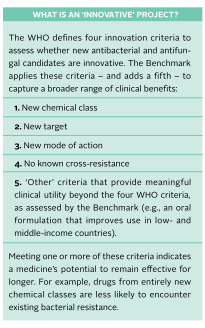
By contrast, six of the eight SMEs assessed in this Benchmark – Basilea, BioVersys, F2G, Innoviva, Iterum and Venatorx – are developing innovative antibacterial and antifungal candidates, collectively representing the half of all innovative projects in scope. When considering antifungal R&D specifically, SMEs are responsible for 60% (3 of 5) of projects in clinical development in scope of the Benchmark. This includes all antifungal projects, not only the innovative candidates, highlighting the significant role SMEs play in addressing a historically overlooked research area, especially given the growing global burden of invasive fungal infections.
These contributions, alongside the sustained scale and diversity of GSK’s pipeline, help ensure that progress continues across both antibacterial and antifungal development in a challenging environment.
As bacterial and fungal evolution inherently leads to the emergence of resistance, its rise over time is inevitable. Sustaining activity in the antimicrobial pipeline is therefore vital, as existing medicines will eventually lose effectiveness. GSK’s long-term commitment, reflected in a broad and diverse portfolio of antibacterial and vaccine candidates, and the role of SMEs in driving continued innovation in the sector together represent a strong example of best practice.
Progress also depends on collaboration across public and private sectors. Partnerships with organisations such as the Global Antibiotic Research and Development Partnership (GARDP), Combating Antibiotic Resistant Bacteria Biopharmaceutical Accelerator (CARB-X), UNITE4TB and Wellcome Trust can help support antimicrobial R&D. Lasting advances will require stronger measures across access and stewardship planning, market incentives and policy reforms prioritising countries with the highest unmet need, ensuring that new treatments reach the patients who need them most.
