Key findings
Thin pipeline, high stakes: How are companies planning to expand access to vital, new antimicrobials?
10 March 2026
10 March 2026
Aurobindo (Generic medicine manufacturer)
Registering off-patent antibacterial and antifungal medicines in East Africa via the East African Community’s Medicine Regulatory Harmonisation (EAC-MRH)
Registration across its antimicrobial portfolio in the East African Community (EAC)
EAC, including Burundi, The Democratic Republic of the Congo, Kenya, Rwanda, Somalia, South Sudan, Tanzania and Uganda
Ensuring patients have timely access to the antibiotics they need is crucial to controlling the spread of antimicrobial resistance (AMR). But before a medicine can be made available to people in a country, it often must be registered there – meaning it has been reviewed and approved for commercialisation by the national regulatory authority (NRA). Pharmaceutical companies, as the producers of antibacterial and antifungal medicines, help determine where their products are accessible by choosing where to file for registration.
Despite facing a disproportionate burden of AMR, countries in sub-Saharan Africa have low registration rates for antibiotics. As a result, treatment options are often limited in these settings, putting people at risk of untreatable infections. Pharmaceutical companies cite factors such as lengthy approval processes and high costs as barriers to filing for registration in these markets. Furthermore, the relatively small market size in many of these countries limits their commercial attractiveness.
Across all generic medicine manufacturers, Aurobindo performs best in widely registering off-patent (generic) antibacterial and antifungal medicines. The company's efforts to register these products – which typically have low profit margins due to competition but are essential for treating infections – help ensure patients can access effective treatments without delays or high costs.
One region where these efforts are particularly apparent is the East African Community (EAC), a regional bloc within sub-Saharan Africa consisting of Burundi, The Democratic Republic of the Congo, Kenya, Rwanda, Somalia, South Sudan, Tanzania and Uganda. Here, Aurobindo engages with the East African Community Medicines Regulatory Harmonization (EAC-MRH) programme to support product registration. This programme enables these countries to jointly evaluate the safety, quality and effectiveness of medical products, led by a lead and a co-lead NRA.
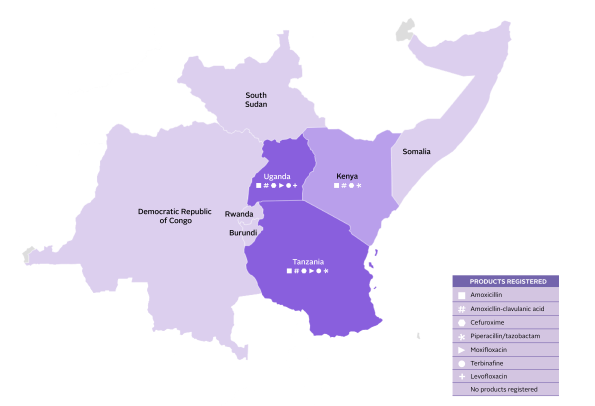
Other companies can look to Aurobindo’s example of pursuing registration across its antimicrobial portfolio in this region. Although registration can be challenging in low- and middle-income countries (LMICs), companies can engage early with regulators to clarify requirements and address potential obstacles in the registration process. They should identify the most effective strategy for bringing products to market – whether through national mechanisms, WHO prequalification or reliance on Stringent Regulatory Authorities (SRAs) – recognising that the best approach depends on the specific context and each country’s needs. As demonstrated by Aurobindo, companies can also leverage regional regulatory harmonisation, which allows a single application to cover multiple countries. Taking a broad, regional approach like this can reduce registration timelines and costs while ensuring faster access for people who need these treatments most.
