Performance in the 2026 Index
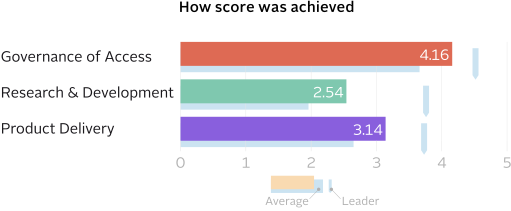
6th place. Roche performs well overall, with strong performance in Governance of Access and research and development (R&D). Board-level accountability, governance controls and patient reach reporting are notable strengths. It signed a new voluntary licensing agreement and demonstrates Best Practice in conducting oncology clinical trials in sub-Saharan Africa. It performs well overall in Product Delivery, although gaps remain in outcome reporting and capacity building performance.
Opportunities for Roche
Improve the quality and broaden the geographic reach of access plans. Roche has access plans in place for 59% of its late-stage projects. Its access plans predominantly focus on registration preparation and post-trial access provisions. To enhance the quality of these plans, it can go beyond commitments to register products in countries where clinical trials are conducted by incorporating additional access components, such as equitable pricing and licensing. For example, for its lung cancer candidate divarasib, it can expand access planning to address affordability and sustainable supply and extend its geographic scope beyond the five upper-middle-income countries (UMICs) included in clinical trials.
Expand access to oncology products in sub-Saharan Africa. Roche has made progress in expanding access to breast cancer medicines in low-income countries (LICs) in the region, including reaching patients with trastuzumab (Herceptin Hylecta®), while access strategies for pertuzumab (Perjeta®) and pertuzumab/trastuzumab (Phesgo®) are under development. It is also the only company assessed conducting oncology clinical trials in sub-Saharan Africa.* It can build on this foundation by advancing existing strategies towards broader patient reach and extending them to additional oncology products without LIC access strategies, including alectinib (Alecensa®) and entrectinib (Rozlytrek®), both indicated for lung cancer.
*FOOTNOTE: Sub-Saharan African countries other than South Africa.
Engage in technology transfer (TT) initiatives for additional oncology products. Roche is engaged in TT initiatives for drug formulation with a manufacturer in China and for the packaging of the oncology products bevacizumab (Avastin®) in Egypt, pertuzumab/trastuzumab (Phesgo®) in Ukraine and atezolizumab (Tecentriq®) in both Egypt and Ukraine. It can build on these initiatives by expanding TTs to more substantive stages of production, including formulation where local manufacturing capacity exists, and extending this approach to additional innovative oncology products and countries.
Changes since the 2024 Index
Signed a voluntary licensing agreement with the Medicines Patent Pool to enable the development, manufacture and supply of generic versions of baloxavir marboxil (Xofluza®) in 129 low- and middle-income countries (LMICs). The agreement creates additional supply pathways for an influenza treatment through collaboration with generic manufacturers.
Partnered with Egypt’s Ministry of Health and Population to build a national digital pathology network designed to improve cancer diagnosis across the country.
Announced plans to advance zosurabalpin, a pipeline candidate targeting the priority pathogen A. baumannii, into Phase III trials.
Partnered with Aga Khan University Hospital in Kenya to strengthen diagnostic capacity by implementing Roche Total Lab Automation, aiming to improve laboratory testing capacity across major disease areas.
Supported the World Health Organization’s Women’s Integrated Care for Cancer Services project in Côte d’Ivoire, Kenya and Zimbabwe to strengthen integrated breast and cervical cancer services within primary healthcare systems.
Partnered with Emcure Pharmaceuticals in India to distribute Roche’s nephrology and transplant portfolio, expanding access to therapies for chronic kidney disease, anaemia management and transplant care through Emcure’s distribution network.
Announced plans to cease manufacturing operations for one of its key antibiotics, ceftriaxone (Rocephin®), by 2030.
Joined the Global One Health Diagnostics Access Compact to support improved access to diagnostics in LMICs.
In March 2026, signed a memorandum of understanding with the National Institute of Pharmaceutical Education and Research Raebareli to advance pharmaceutical education and research in India.
Expanded clinical research activities and access initiatives in Mexico with a projected USD 60mn investment as part of its 2025–2026 strategy.
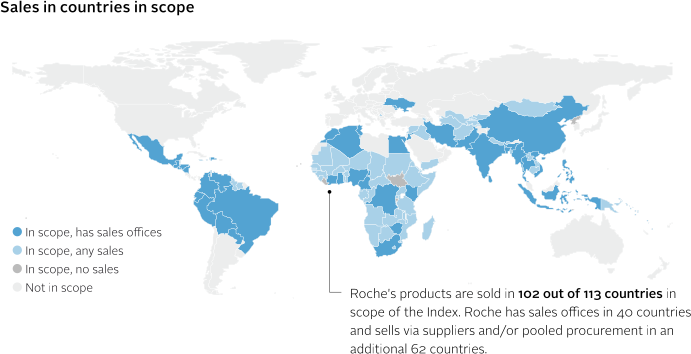
Sales and operations
Therapeutic areas: Cardio-metabolic, diabetes, haematology, infectious diseases, inflammatory bowel diseases, immunology, neurology, oncology, ophthalmology, respiratory, women's health
Product categories: Diagnostics, innovative medicines
M&A news: Roche acquired Poseida Therapeutics and 89bio for up to USD 1.5bn and up to USD 3.5bn respectively in 2025. In 2026, the company acquired PathAI for up to USD 1.05bn.
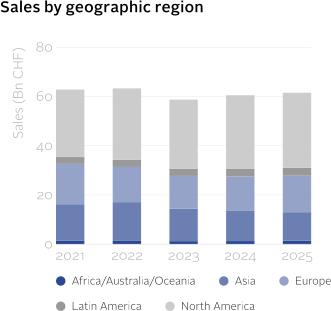
Sales by segment (2025) – in CHF | |
Pharmaceuticals | 47.67 bn |
Diagnostics | 13.85 bn |
Total | 61.52 bn |
Sample of pipeline and portfolio assessed by the Index
PIPELINE for diseases in scope
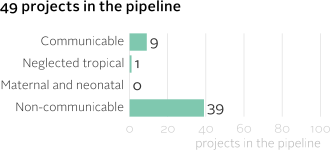
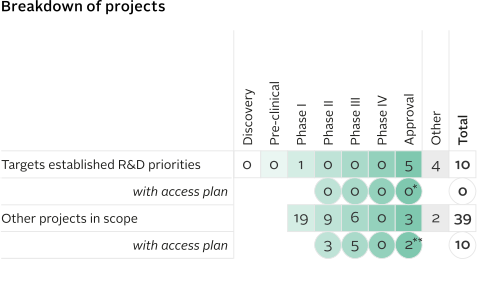
Roche has 49 R&D projects in scope, 10 of which target priority diseases, including lower respiratory infections (2) and sexually transmitted infections (2). Of these 10 projects, 9 are diagnostic tools. The remaining 39 R&D projects target other diseases in scope, including cancer (24), diabetes mellitus (4) and Alzheimer's disease (3). Of its 49 R&D projects, 17 are in late-stage development, with evidence of access planning for 59% (10/17) of these. In addition, 6 diagnostics have been approved during the period of analysis.
PORTFOLIO as selected for analysis by the Index
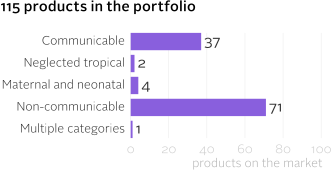
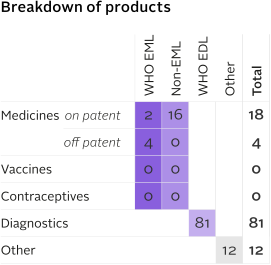
Roche has 115 products in scope: 22 medicines, 81 diagnostics and 12 platform technologies. Six medicines are on the WHO EML and 18 are on patent. All diagnostics are on the WHO EDL. Most medicines target NCDs (17), mainly cancer (16). Four target communicable diseases: coronaviral diseases and lower respiratory infections (2 each). Its technologies are for lower respiratory infections (4), diabetes (3), cancer (2) and other diseases in scope. Its diagnostics are for diseases such as cancer (35), cardiovascular diseases (9) and HIV (8).
Performance breakdown
Governance of Access
4th place. Roche performs strongly in Governance of Access, supported by board-level oversight, access-linked incentives for the CEO and in-country managers, and robust controls against non-compliant or corrupt conduct. It also shows strong commitment to responsible sales and promotional practices. It applies a systematic, company-wide approach to measuring patient reach, with demonstrated progress against time-bound goals. It publicly reports patient reach numbers at least annually, with some level of disaggregation.
Has clear board-level accountability for access to medicine via its Corporate Governance and Sustainability Committee. This committee oversees access-related strategies and reviews related matters at least annually. Roche includes access-related incentives for senior executives, including the CEO, and in-country managers via its variable compensation framework, linked to sustainability objectives and equitable health outcomes. It provides training, awareness raising or guidance to employees on the access-to-medicine strategy and activities at least annually.
Shows strong commitment to responsible sales and promotional practices. Roche sets sales targets at the individual, division and company levels, and incentives for representatives are not solely based on sales volume. It commits to ensuring ethical interactions with healthcare professionals in its code of conduct. It publicly declares that transfers of value to healthcare professionals (e.g., payments for exchanging scientific information) are made at fair market value. It publicly discloses information on such payments in countries in scope if required by law or local regulation.
Has a robust set of controls to promote ethical conduct and mitigate risk to ensure that governance efforts are not undermined by non-compliant or corrupt activities. Roche performs strongly in this respect. It has policies to mitigate non-compliance risks, including processes to ensure third-party compliance with company standards, fraud-specific risk assessments and region or country risk-based assessments. It has an ethical decision-making framework for employees and provides related training regularly. No breaches in countries in scope were found in the period of analysis.
Publicly supports the Doha Declaration on TRIPS and Public Health. However, it expresses reservations on some provisions of TRIPS flexibilities, namely compulsory licensing. Roche states that compulsory licensing should be considered on its own merits on a case-by-case basis.
Performs strongly in its approach to measuring and reporting on patient reach. Roche applies a systematic, company-wide approach across its full portfolio and all countries where it supplies products. It publicly discloses the metrics and assumptions, while the underlying equation and limitations are shared under NDA. It has set measurable, time-bound product-related patient reach goals, with demonstrated progress. Patient reach numbers are reported publicly at least annually and are disaggregated by country-income level, therapeutic area and geographic region, with additional disaggregated data shared under NDA.
Research and Development
4th place. Roche performs strongly in R&D, supported by a robust pipeline targeting diseases in scope, including priority diseases. Although access plans are not in place for all late-stage projects, access plans for oncology candidates are broad in geographic scope, covering around twice as many countries as the industry average. However, Roche does not disclose disaggregated R&D investment data, either publicly or to global health organisations.
Average-sized pipeline addressing priority diseases in scope, compared to peers, consisting of 10 projects, including 5 diagnostics approved during the period of analysis. None of the priority projects were eligible for access planning assessment.
Large-sized pipeline addressing other diseases in scope, compared to peers, consisting of 39 projects, with access plans identified for 59% (10/17) of its late-stage R&D projects. These projects target diseases not currently identified as priorities by global health stakeholders. Access plans include a limited range of access-related components, focusing predominantly on registration preparation and post-trial access, with geographic scope mostly focused on emerging markets. However, for its late-stage breast cancer candidates, Roche demonstrates broader geographic scope: clinical trial activities and subsequent intent to license extend to a wider set of LMICs and an LIC. In addition, 1 diagnostic was approved during the period of analysis.
Does not publicly disclose R&D investment data disaggregated by disease category, product type or phase of development. Furthermore, Roche does not disclose disaggregated R&D investment data to global health organisations.
All 3 R&D capacity-building initiatives included for analysis meet all Good Practice Standards (GPS). One of these initiatives, the African Genomics Programme, aims to develop an open African-led biobank via multiple collaborations, including African universities and research centres.
Product Delivery
8th place. Roche performs well in Product Delivery. It registers newer products in more countries than peers on average, including high-burden countries. It has access strategies in place for both self-administered and healthcare practitioner-administered products with outcomes tracked and reported. However, some strategies do not extend to LICs. It has also expanded access through a new voluntary licence for baloxavir marboxil, covering 129 LMICs.
Registers newer products* in more countries (19) than its peers on average. Roche’s products are also, on average, registered in more countries with the highest burden of disease (3) compared to peers. For 4/9 of the products assessed, there is evidence of registration in LICs. Pertuzumab/trastuzumab/hyaluronidasezzxf (Phesgo®), indicated for breast cancer, is its most widely registered product, totalling 61 countries in scope. It reports engaging in several mechanisms to facilitate registration, including the WHO SRA-CRP and several regional joint assessment procedures such as CARPHA-CRS and ZAZIBONA.
*Products that received their first marketing authorisation within the last 5 years.
Supplies 4 products via supranational agreements, with some information on outcomes. The products are diagnostics for HIV and HPV testing, included in Roche’s Global Access Program (GAP), run in collaboration with UNAIDS, CHAI, PEPFAR and the Global Fund. Through the GAP, products can be procured at a standardised price to supply the public sector of almost 90 eligible countries. For 3 products, Roche demonstrates access strategies for at least 1 country not eligible for such supply. It also engages in additional initiatives to strengthen health systems, focusing on testing capabilities. It shares the doses supplied via supranational agreements for all the products. For the non-eligible country examples, it reports the number of patients reached for 1 product, while outcome reporting for the other products is more limited.
Comprehensive access strategies for most of its HCP-administered products, with outcomes tracked and reported. For 4 of the 5 products analysed, all oncology medicines, Roche provides access strategy examples in UMICs and LMICs. For 2 of these products, it reports access strategies in LICs, including health system strengthening initiatives around oncology care in partnership with the local governments, but the level of implementation varies. It is working on similar collaborations in a LIC for a 3rd product. For the 5th product, only a UMIC example is provided. For all the examples assessed, it provides evidence of considering different payers’ ability to pay. Outcomes are tracked and reported for all products in the UMIC and LMIC strategies, and only for 1 product for the LIC examples.
Access strategies for its self-administered products, with outcomes tracked and reported, but limited geographic coverage. For 2 of the 3 products analysed, Roche provides evidence of access strategies in UMICs and LMICs. For the 3rd product, entrectinib (Rozlytrek®), indicated for multiple cancer types, it reports a strategy only in a UMIC. In China (UMIC), all 3 products are publicly reimbursed, and the strategies are supported by additional initiatives such as HCP education and diagnosis support. For baloxavir marboxil (Xofluza®), indicated for lower respiratory diseases, it signed a non-exclusive voluntary licensing (NEVL) agreement covering multiple LMICs and LICs. Roche reports information on outcomes for all its strategies, and an increase in the number of patients reached for the LMIC examples.
Publicly commits not to file for or enforce patents on any products in all LDCs and LICs.
Publicly discloses product patent status for countries in scope. Roche publicly discloses patent information for small molecules in scope via the Pat-INFORMED database, including information such as filing date, grant number, grant date and jurisdiction.
Newly signed NEVL agreement for an on-patent compound. In May 2026, Roche signed a voluntary licence for the on-patent influenza treatment baloxavir marboxil. It contains access-oriented clauses and covers a broad geographic scope.
All 3 manufacturing capacity-building initiatives included for analysis meet all GPS. For example, Roche is transferring packaging manufacture for oncology products atezolizumab (Tecentriq®) and pertuzumab, trastuzumab and hyaluronidase (Phesgo®) to state-owned MZU in Ukraine. Roche is supporting the partner in obtaining GMP certification.
2 supply chain capacity-building initiatives were included for analysis, but neither meets all GPS. For example, Roche supported distributor Isabella Healthcare Services in Ghana by providing training, standardisation procedures and software configurations. The initiative aimed to improve demand forecasting and supply planning.
4 of the 5 health system strengthening initiatives included for analysis meet all GPS. For example, Roche is partnering with the WHO to support the Women’s Integrated Care for Cancer Services, integrating cancer care into primary healthcare in Kenya, Zimbabwe and Côte d’Ivoire. The initiative model involves workforce training, improved diagnostics, digital health systems and policy alignment.
No evidence of new or existing IP-sharing agreements that meet the inclusion criteria.
Fulfils 2 of 3 mechanisms to ensure continuous supply in LMICs and is involved in local manufacturing at its own sites in countries in scope and demonstrates involvement in technology transfers (TTs). These TTs are designed to improve patient access, with ongoing support to the manufacturer. In Côte d'Ivoire, Roche also works with the National Cancer Control Programme, healthcare professionals and government partners through inventory review meetings and direct outreach to share information on stockouts, align on mitigation actions and ensure continuity of oncology care.
Has a policy for reporting substandard and falsified medicines in countries in scope. Roche reports cases to national or local regulatory authorities typically within 24 hours. It provides evidence of shortened reporting timeframes for cases that only require visual inspection for confirmation.
No evidence of inclusive business models that meet all inclusion criteria. However, Roche’s Women’s Oncology Initiative demonstrates approaches that facilitate access for populations often not addressed by the company’s existing business models.