Performance in the 2026 Benchmark
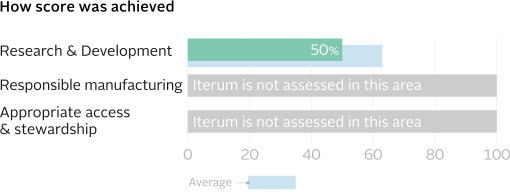
Mid-performing. Iterum’s sole pipeline candidate ORLYNVAH ™ targets a ‘critical’ priority pathogen and was approved during the period of analysis. Although it doesn’t meet WHO’s innovation criteria, it demonstrates Best Practice by meeting the Benchmark’s ‘other’ innovation criterion, which assesses real-world utility in LMICs; as the first approved oral penem, it enables outpatient treatment of resistant UTIs. It has a stewardship plan in place; however, access planning can be strengthened, as there are currently no defined plans to supply LMICs.
Opportunities for Iterum
Work with partners to expand access and stewardship plans for ORLYNVAH™. Iterum’s sulopenem/probenecid (ORYNVAH™) antibiotic was approved for uncomplicated urinary tract infections in 2024. In partnership with the Combating Antibiotic-Resistant Bacteria Biopharmaceutical Accelerator (CARB-X), the company published a stewardship and access plan outlining stewardship measures. While the plan has an initial focus on US and European markets, as Iterum’s operational capacity expands, the company can collaborate with strategic partners to expand access in LMICs with high unmet medical need.
Sales & Operations
Therapeutic areas: Anti-infectives
Financial stage: Public (IPO completed in May 2018)
Products on the market: ORLYNVAH®
Commercial partners: Iterum has partnered with EVERSANA for the US commercialisation of ORLYNVAH® and has a licensing agreement with Pfizer related to the product’s development.
Funding partners: Iterum has received funding from CARB-X for the development and commercialisation of the antibiotic sulopenem.
Sample of pipeline assessed by the Benchmark
Pipeline for diseases in scope
Research & Development
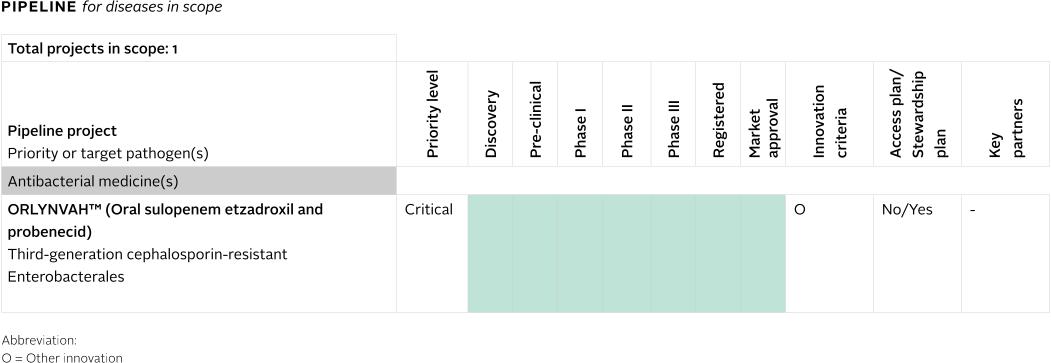
One recently approved antibacterial medicine targeting a critical priority pathogen. Iterum Therapeutics has 1 project in its pipeline targeting pathogens in scope. Its antibacterial pipeline project, ORLYNVAH™ (Oral sulopenem etzadroxil and probenecid), received market approval for the treatment of uncomplicated urinary tract infections (UTIs) during the period analysis. ORLYNVAH™ targets 1 priority pathogen, cephalosporin-resistant Enterobacterales, classified as ‘critical’ in WHO’s bacterial priority pathogen list. Although it does not meet WHO’s innovation criteria, it meets the Benchmark’s ‘other’ criterion for innovativeness as the first approved oral penem, enabling outpatient treatment of resistant UTIs. Iterum Therapeutics did not report an active in-house discovery programme.
No access plan for its sole late-stage project, but stewardship plan in place. Through its funder, CARB-X, Iterum published a stewardship and access plan for its antibiotic ORLYNVAH™, which received marketing approval during the period of analysis. The plan contains stewardship provisions, such as diagnostic support, appropriate use and surveillance, but it currently lacks concrete plans for access in LMICs. It did not conduct clinical trials for ORLYNVAH™ in any countries in scope.
Active in 1 multinational AMR surveillance programme. While Iterum is not assessed for its activities in AMR surveillance as an SME, its involvement in 1 AMR surveillance programmes was identified during the period of analysis. Like 5 other companies in scope, Iterum is involved in the 'SENTRY Antimicrobial Surveillance Programme', which is run by JMI Laboratories. While companies are involved with SENTRY in various ways, Iterum specifically sponsors the collection and analysis of surveillance data, including data for its project sulopenem etzadroxil/probenecid. In total, the SENTRY programme covers 88 and 43 genera of bacterial and fungal pathogens, 45 antibacterial and 8 antifungal medicines and 55 countries. SENTRY's antibacterial data can be accessed via its website; antifungal data is accessible via Pfizer’s ATLAS website. The methods used to collect surveillance data for SENTRY are largely clear, including: the type of surveillance; where the analysis is conducted and which breakpoints are used; and how deduplication is considered. Further, Iterum plans to initiate a 5-year surveillance study as part of its post-marketing requirements and to take measures to make local susceptibility data available to prescribers.
